Reporter: Hu Lan, Lin Wanxin; Photographer: Xu Bohan
Reviewer: He Ying, Yang Chenghu
From May 28 to 29, 2026, Prof. Dr. Lauren F. Pfister, Professor Emeritus of Hong Kong Baptist University and an internationally renowned sinologist, was invited to the Faculty of Foreign Languages at Ningbo University (NBU) to deliver two academic lectures. As key events of the Faculty’s “International Expert Short-Term Visiting Program,” the two lectures focused respectively on the cross-cultural interpretations of Chinese classics by six European sinological giants over the past two centuries, and on a case study of James Legge's translation of the Daodejing. Together, they presented the audience with an academic feast on the theme of "How Chinese Classics Go Global."
Prof. Pfister currently serves as Rector of the Hephzibah Mountain Aster Academy in Colorado, USA, and Associate Editor of the A&HCI-indexed Journal of Chinese Philosophy. He has long devoted himself to the translation history and hermeneutics of Chinese Ruist (Confucian) and Daoist classics. His internationally acclaimed scholarship on James Legge includes a two-volume monograph and his co-edited fifteen-volume Collected Works of James Legge (Commercial Press, Beijing), both to be considered landmark achievements in the field.
Lecture I: James Legge's Translation of the *Daodejing– Gains and Losses in Cross-Cultural Translation
On the evening of May 28, the first lecture was held in the Multilingual Virtual Simulation Lab, Room 210, Li Dak-Sum Foreign Languages Building, chaired by Prof. Yu Lingli.
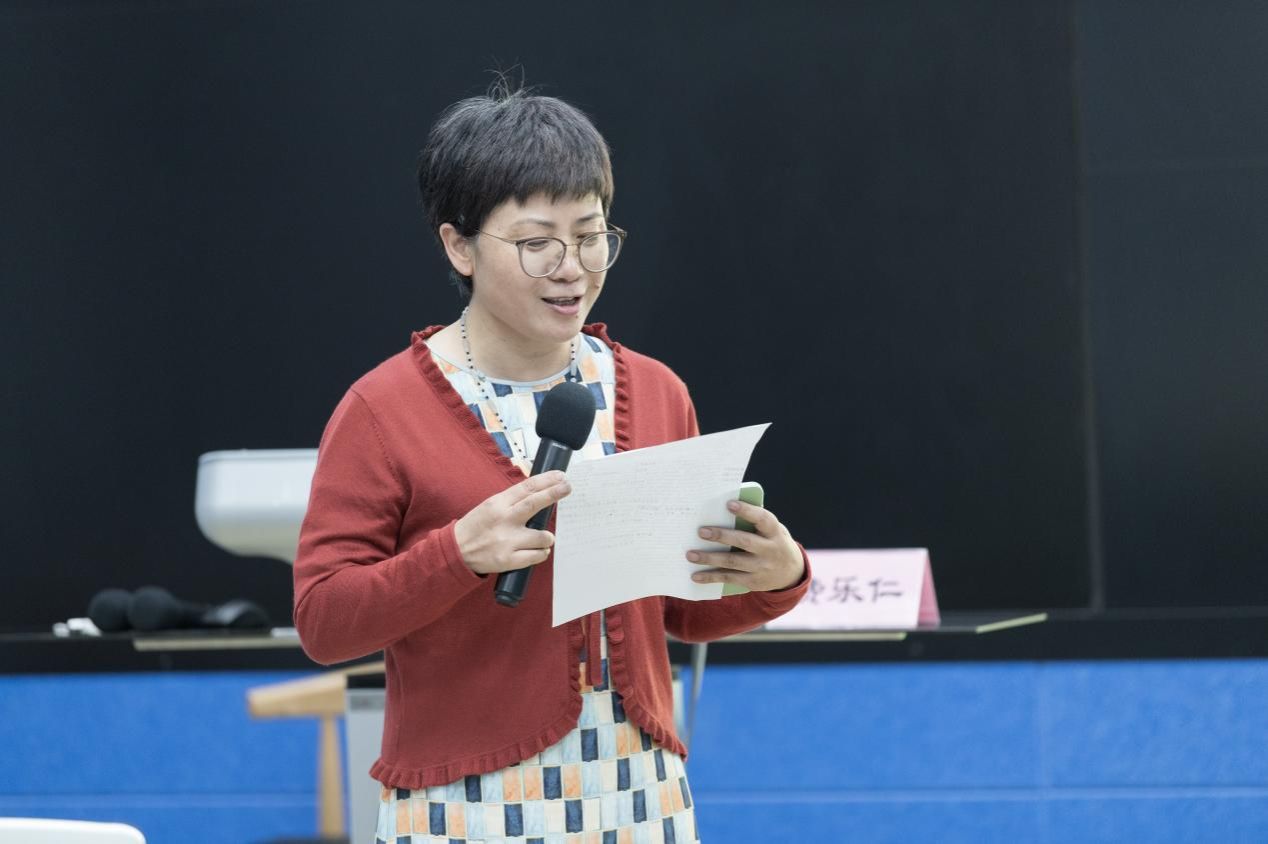
Prof. Pfister systematically traced the interdisciplinary sinological research of James Legge (1815–1897), highlighting two monumental translation projects: *The Chinese Classics and The Sacred Books of China. Drawing on Legge's early linguistic manuscripts, his edited edition of The Travels of the Emperor Zhengde of the Great Ming Dynasty, and his lecture materials from Oxford University, Prof. Pfister demonstrated Legge's comprehensive knowledge of Chinese literature – from the Sacred Edict and Three-Character Classic to Li Sao and the Records of the Grand Historian.
In the core part of the lecture, Prof. Pfister used chapters 28 and 40 of the Daodejing as examples, comparing the original Chinese with Legge’s English translation line by line. While affirming the historical value of Legge’s version, he also pointed out that Legge’s preference for rendering the text into English versified form may have weakened the unique philosophical character of Daoist thought. This micro-analysis vividly illustrated how the choice of translation strategies can affect the transmission of core ideas when Chinese classics “go global,” thereby influencing the depth and precision of civilizational dialogue.
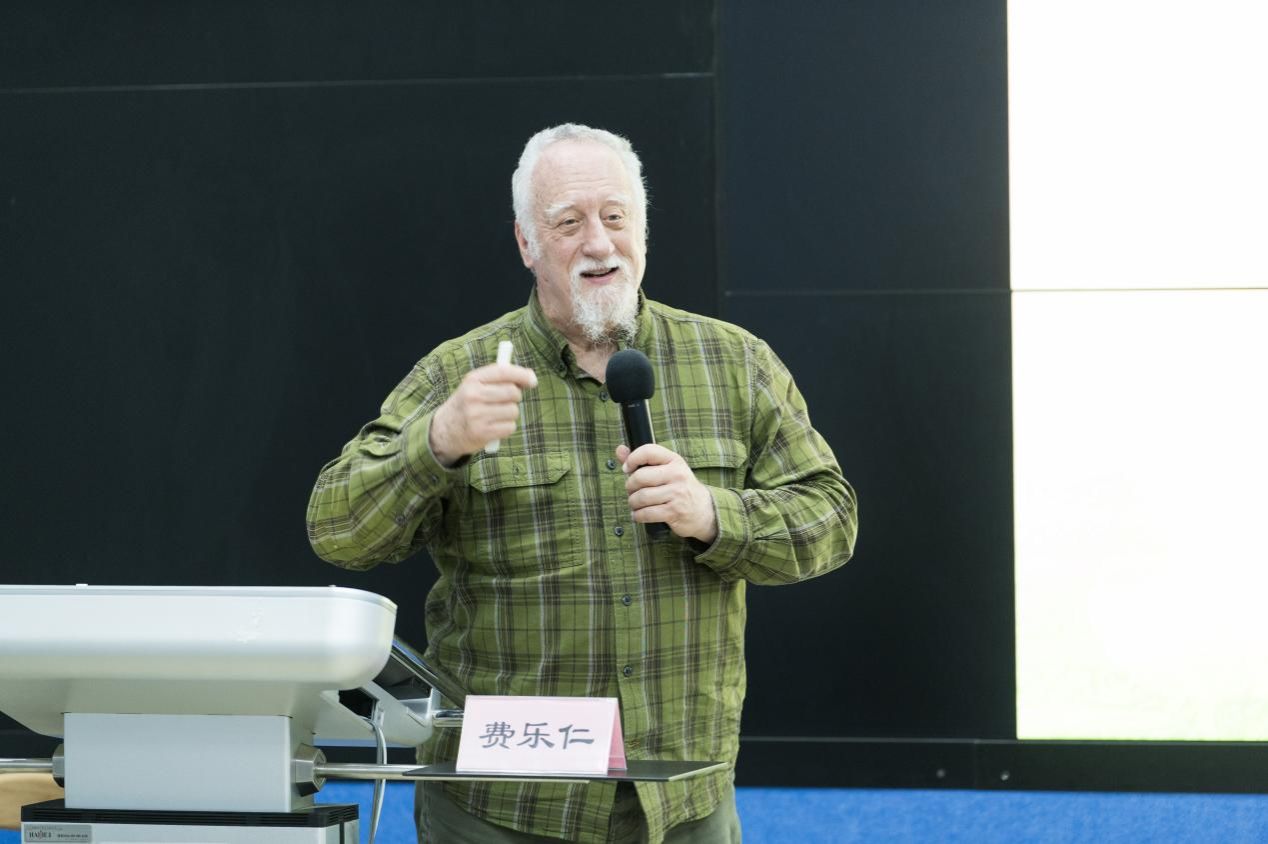
During the Q&A session, a teacher asked about the criteria used by international academia to judge translations of Chinese classics. Prof. Pfister answered from three perspectives: the effect of rendering culture-loaded terms, the degree of correspondence between the original classical Chinese meaning and the translation, and the handling of grammatical features unique to Chinese.
Lecture II: Cross-Cultural Genealogies of Six European Sinological Giants – Historical Lessons for Going Global
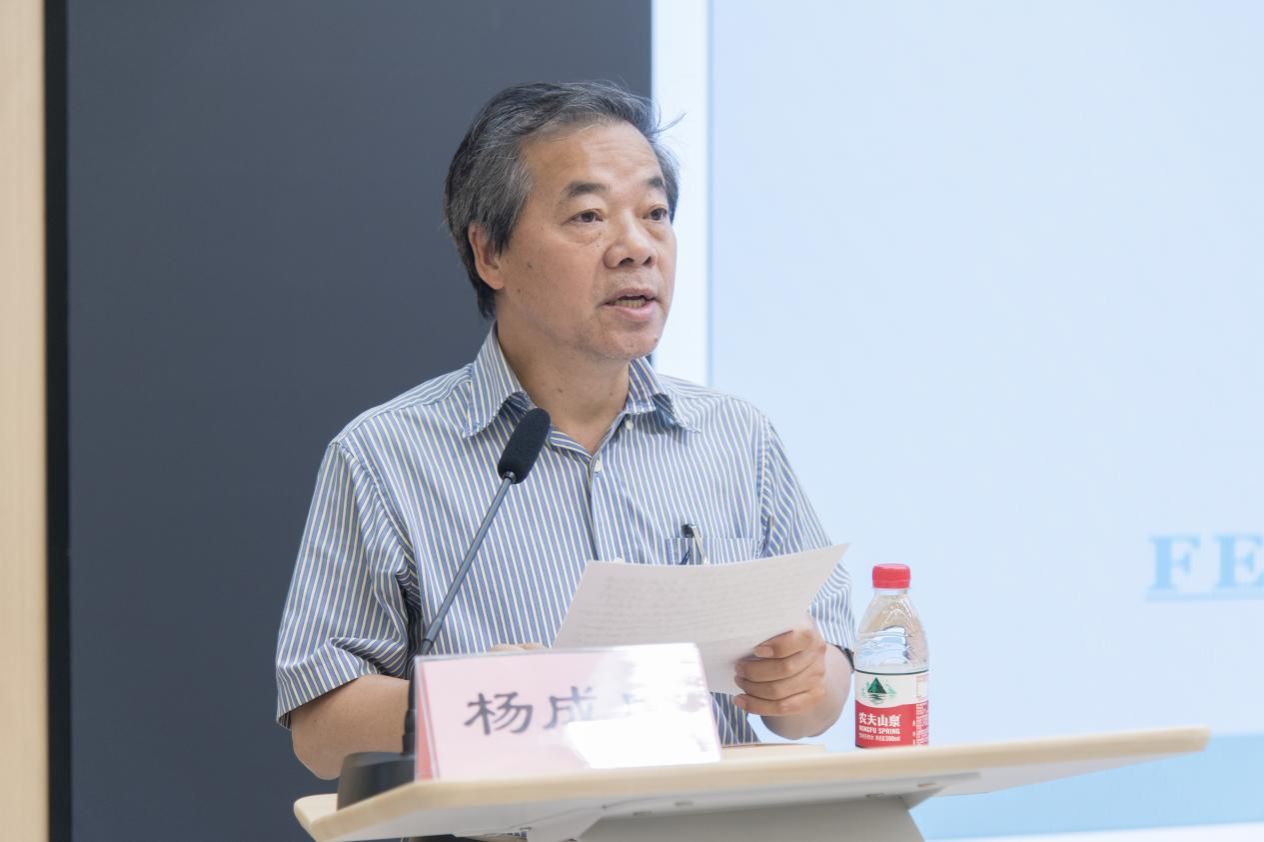
On the afternoon of May 29, the second lecture was held in Lecture Hall 218, Li Dak-Sum Foreign Languages Building, chaired by Prof. Yang Chenghu.
Prof. Yang Chenghu is a former Associate Dean of the Faculty of Foreign Languages at NBU, holds a PhD in Linguistics, and has long dedicated his research to the English translation of Chinese classics. He is the author of Aspects in the English Translation of Chinese Classical Poetry and has made notable contributions to the translation of Chu Ci (Elegies of Chu) and Tang poetry into English.
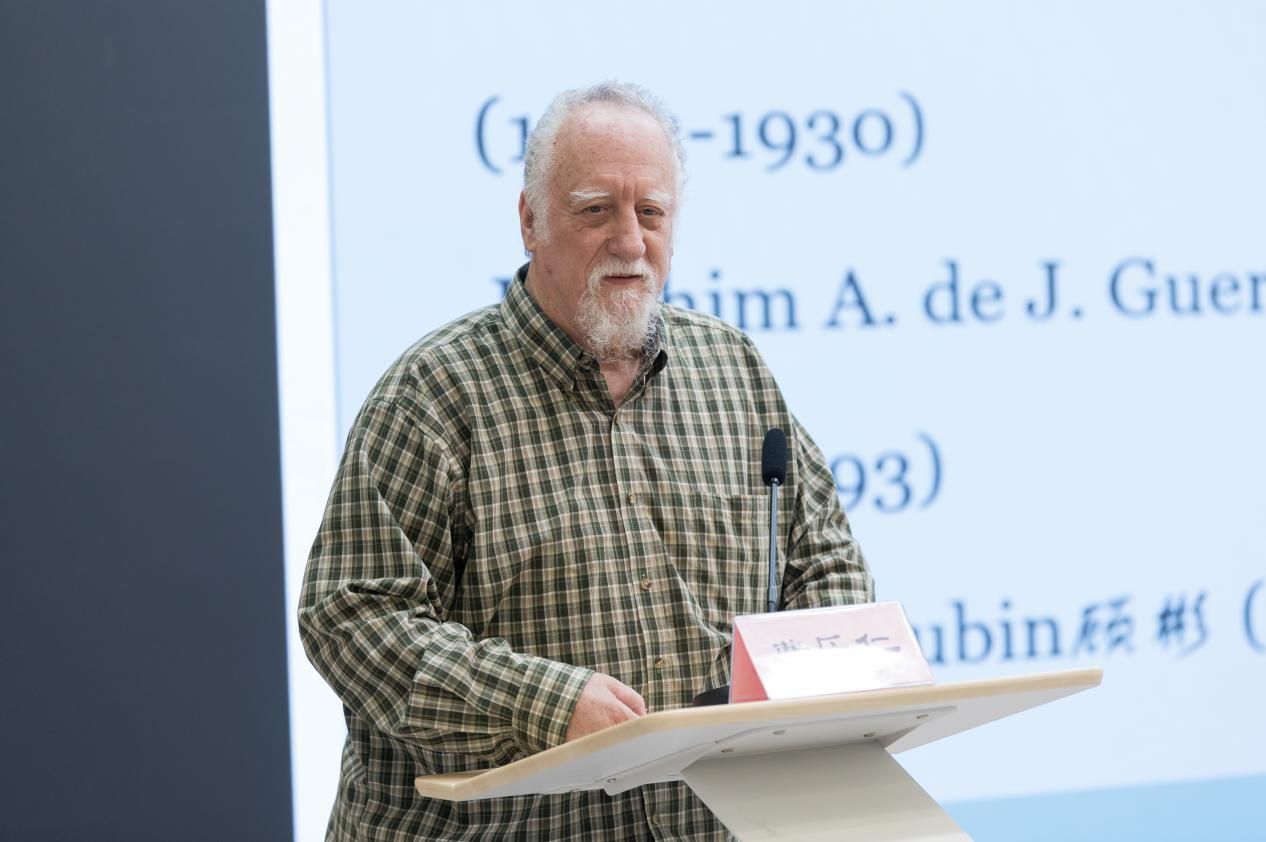
In this lecture, Prof. Pfister focused on six sinological giants: James Legge, Angelo Zottoli, Séraphin Couvreur, Richard Wilhelm, Joachim Guerra, and Wolfgang Kubin. He structured his talk around six questions: Who were they? Which classics did they translate? What language media did they use? What is their cultural significance? What is their historical value? And who has had the greatest influence in modern Chinese academia?
He pointed out that most of these six translators were "missionary-scholars" who systematically translated the kernel canons of Confucianism and Daoism into English, Latin, French, German, Portuguese, and other languages, each creating "translational classics" that remain indispensable in their respective cultures. From cultural and historical perspectives, the profound differences among the six are highly instructive: Legge was shaped by Scottish Common Sense philosophy and an Evangelical worldview; Zottoli and Couvreur inherited the Jesuit figuralist tradition; Wilhelm sought to heal the spiritual crisis of post-WWI Europe with Eastern wisdom; Guerra, after the Second Vatican Council, devoted himself to comprehensive scriptural translation; and Kubin engaged in his annotations with reflections on the implications of ancient wisdom for contemporary Chinese issues. These differences demonstrate that the overseas transmission of Chinese classics is never a one-way linguistic conversion, but a cross-cultural dialogue deeply intertwined with the translator's intellectual background, the spirit of the age, and the presuppositions of the readership.
Prof. Pfister emphasized that in terms of scholarly influence, research articles on James Legge alone number in the thousands, making his impact the most far-reaching. This historical genealogy provides a valuable reference for the current drive to "take Chinese classics abroad": only by deeply understanding the distinctive pathways through which different civilizations have received Chinese classics can genuine and effective mutual learning be achieved.
Interaction and Conclusion: Sincere Dialogue Through Translation
During the interactive sessions of both lectures, faculty and students engaged with Prof. Pfister on a range of questions, including the influence of Western sinologists within Western intellectual systems, how a translator's presuppositions about their readership can shape translation strategies, and the specific identities of the three Chinese assistants who worked with James Legge on his translations. Prof. Pfister particularly encouraged listeners to personally visit university libraries to browse these historical translations, emphasizing that only through sincere dialogue enabled by translation can prejudice be overcome and mutual learning between civilizations be realized.
At the conclusion of the second lecture, Prof. Yang Chenghu presented Prof. Pfister with a seven-character metrical poem which is rendered as the following English version)
A sinologist, you, with benevolent power,
Regard six o’erseas giants as a classic-tower.
Your lecture of Chinese saints’ books rings like a bell,
And your late night’s reading has tastes of teas with flower.
You’re in line with Shoudao, a teacher like spring breeze,
And succeed Vimalakīrti-styled floral shower.
In th’ realm of academia so fairly unbound,
Like a boat o’er th’ vast ocean you’re a gentle rower.
In his concluding remarks, Prof. Yang Chenghu noted that Prof. Pfister, with his profound scholarship and rich historical materials, had presented an academic feast in cross-cultural hermeneutics. From the micro-analysis of Legge's Daodejing translation to the macro-level genealogy of six European sinological giants, the two lectures complemented each other perfectly, providing valuable historical reference for the contemporary international dissemination of Chinese classics and for dialogue between Chinese and world civilizations.
The second lecture was co-organized by the Faculty's Office of International Affairs, the MTI Education Center, and the Ningbo International Translation Association. In the future, the Faculty will continue to rely on its "International Expert Short-Term Visiting Program" to promote high-quality development of foreign language and literature disciplines as well as translator training. Through academic exchange, it will help China's fine traditional culture reach the world stage and contribute to mutual learning between civilizations.
Appendix: Profile of Prof. Dr. Lauren F. Pfister
Prof. Dr. Lauren F. Pfister is an internationally renowned sinologist and comparative philosopher. He currently serves as Rector of the Hephzibah Mountain Aster Academy in Colorado, USA, Professor Emeritus of the Department of Religion and Philosophy at Hong Kong Baptist University, and Associate Editor of the A&HCI-indexed Journal of Chinese Philosophy.
He earned his PhD in Comparative Philosophy from the University of Hawai'i at Mānoa, has lived in Hong Kong for over thirty years, and is proficient in English, Chinese, German, French, and other languages. Prof. Pfister has long devoted himself to the historical development of Chinese Ruist and Daoist philosophical classics, the translation of ancient Chinese classics into foreign languages, and hermeneutical analysis. His internationally acclaimed scholarship on the missionary-scholar James Legge includes the two-volume monograph Striving for 'The Whole Duty of Man': James Legge and the Scottish Protestant Encounter with China(Frankfurt: Peter Lang, 2004) and his co-edited fifteen-volume Collected Works of James Legge (Commercial Press, Beijing, 2024– ). He has published over 140 articles in dictionaries and encyclopedias, and more than 120 articles in journals and books. A frequent invited speaker at universities across Europe, America, and Asia, he has made outstanding contributions to cross-cultural understanding of the Chinese classics and to the promotion of mutual learning between civilizations.